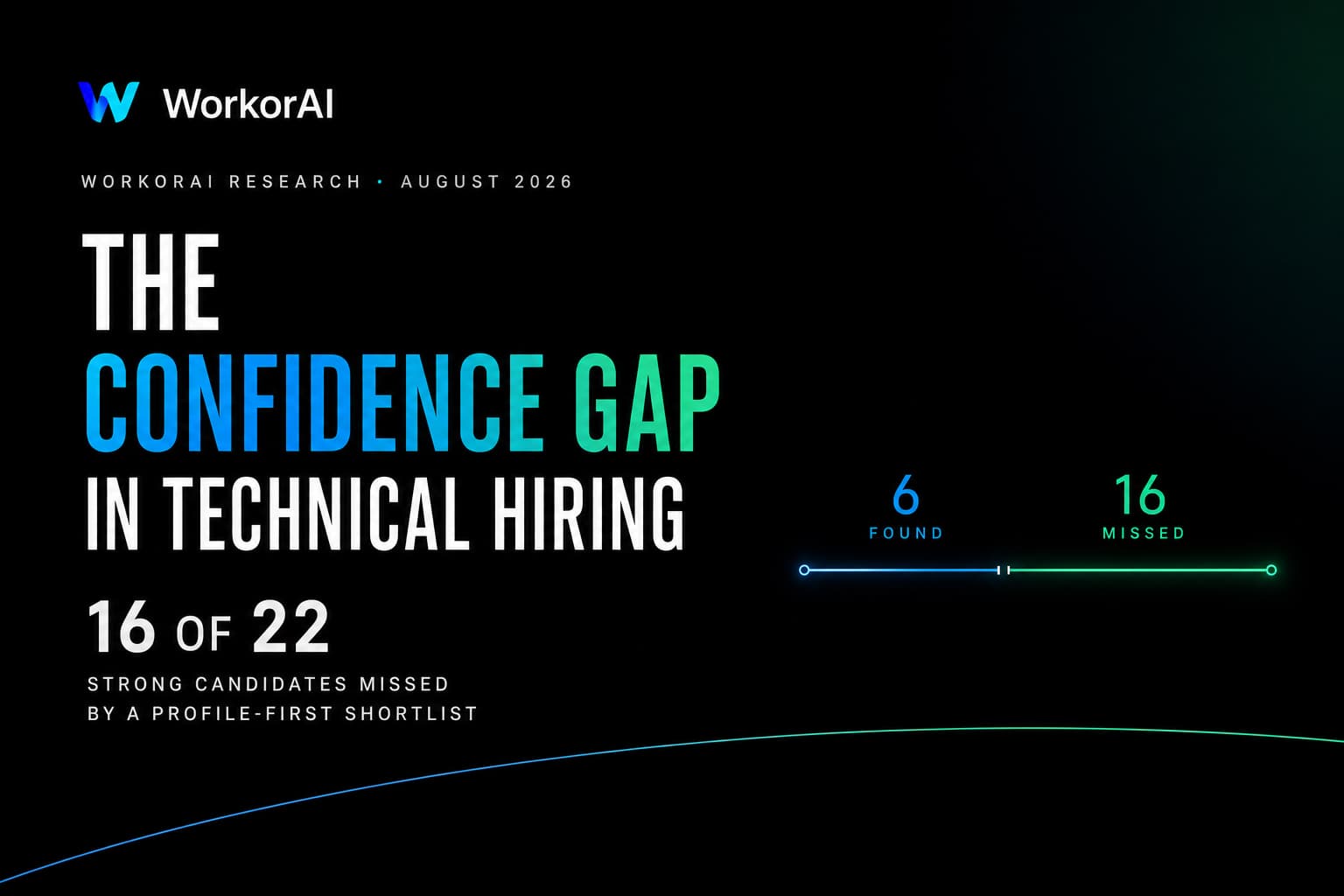
Github analysis or test tasks? code quality wins
Modern tech hiring often circles around a familiar dilemma: entrust candidate evaluation to set-piece test tasks, or turn to the rich, untampered record of GitHub histories? While test assignments offer a sense of control, the real risk is hiring not just for “correctness,” but for something far more essential—code quality that stands up under pressure and time. For tech leads tasked with building high-performance teams, missing the mark here means slowing project velocity and leaving long-term reliability to chance.
The central challenge is subtle but critical: separating genuine, sustainable coding ability from rehearsed or copied displays. This article explores why code quality—revealed through deep GitHub analysis—provides a more dependable signal for engineering talent than any test task alone. Expect firsthand insight, practical recommendations, and a clear path to drive your team forward.
The Traditional Route—Merits and Flaws of Test Tasks
Test tasks have been the industry’s safety net for years. They bring structure, standardization, and a sense of objectivity to hiring. By assigning identical challenges, hiring teams can compare apples to apples—or so it seems at first glance. This approach allows for controlled environments, uniform benchmarks, and a presumption of fairness.
But the modern landscape is not so simple. The internet is alive with ready-made answers; forums, ChatGPT, and repo-star sharing have transformed even specialized challenges into commodity knowledge. Test tasks all too often capture how well a candidate can perform in a vacuum, divorced from collaboration, iterative improvement, or scalable code habits.
Checklist: Typical Pitfalls of Test Tasks
- Candidate solves the task alone—no peer review, pressure, or real workflow.
- No insight into code history, teamwork, or response to feedback.
- Skill signals can be easily spoofed, copied, or “optimized” for one-time appearance.
Ultimately, test tasks can fall short when it comes to predicting real-world performance, especially under the ongoing pressures of a live codebase.
Code Quality in the Wild—What GitHub Analysis Reveals
GitHub has evolved into a genuine portfolio for developers, encoding not just static knowledge, but living demonstration of skills over time. Unlike one-off performances, a candidate’s public commit history, pull request interactions, and code review participation paint a multi-dimensional picture.
Key metrics become visible:
- Refactoring habits and documentation discipline.
- Error handling and real-world test coverage.
- Commit granularity: Are changes thoughtful and incremental?
- Branching strategies and ownership signals.
- Collaboration: Evidence of meaningful feedback, request resolution, and code evolution.
Significantly, while a test task can be staged or “perfected,” no one can convincingly fabricate years of diverse, authentic contribution—or the trail left by thoughtful code reviews.
| Method | Detects Fakes? | Real Collaboration? | Evolves Over Time? | Reviewer Feedback? |
|---|
| Test Tasks | No | No | No | No |
| GitHub Analysis | Yes | Yes | Yes | Yes |
Thus, GitHub analysis isn’t a replacement for vetting—it’s a leap toward assessing not just who can code, but who codes well, with others, in the unpredictable wild.
Antithesis—Before/After Comparison
Consider two candidates with identical test task scores:
- Candidate A: Hands in an immaculate test solution, but GitHub shows a handful of monolithic, copy-paste commits and little to no collaborative footprint.
- Candidate B: Delivers a merely adequate test solution, but displays a vibrant GitHub account: routine pull requests, consistent code refactoring, active participation in code reviews, and traceable improvements across months or years.
When teams compare outcomes, it’s those who prioritize GitHub code quality who report the real wins—faster onboarding, smoother integration, and a codebase that doesn’t buckle under production strain.
How Startups and Enterprises Benefit:
- Startups: Accelerate evaluation, spot genuine cultural and technical fit, minimize false positives.
- Enterprises: Introduce scalable, data-driven processes that reliably filter high volumes, with clear signals on both hard skills and team ethos.
Best Practices—Implementing GitHub Analysis for Hiring
To get value from GitHub analysis, tech leads should look beyond just “green squares.” Seek these KPIs:
- Regular, consistent commit patterns—not massive, last-minute pushes.
- Meaningful commit messages that narrate intent and technical context.
- Engagement in code reviews: both giving and receiving feedback with clarity.
- Evidence of code evolution: regular refactoring, bug resolution, gradual improvement of tested code.
Modern tools—like WorkorAI—bring these KPIs front and center, automating the detection of real signal versus noise. The goal: empower tech leads to hire for resilient, scalable code quality, not just raw speed or elegance in a controlled test.
FAQ
Q1: Can GitHub activity be staged or faked?
A1: While it’s possible to upload superficial projects, authentic history—consistent quality, iterative improvement, peer review engagement—cannot be realistically forged on demand.
Q2: What about candidates with private or proprietary code?
A2: Open source or public work is just one lens; supplement it with collaborative code sessions or pair programming to cross-check essential skills in action.
Q3: Are test tasks obsolete?
A3: No; they have value as a filtering or supplementary tool. They just shouldn’t stand in for real-world code analysis—combining both offers the full picture.
Q4: How does code review participation reflect seniority?
A4: Leaders give and solicit feedback, take ownership of complex changes, and mediate technical debates—visible directly through structured peer-review histories.
Conclusion
In engineering, the difference between flashy and sustainable can define a team’s future. Real-world code signals, captured over time, help leading teams build cohesion, accelerate onboarding, and reduce the cost of mis-hires. The evidence is clear: code quality in context—not staged tasks—unlocks higher retention, trust, and product momentum.
Ready to transform how your team identifies real talent? Dive into WorkorAI’s code quality analysis and start hiring the way today’s software engineering truly works. Try it, subscribe, or join the discussion—future-proof your hiring decisions now.