Human recruiter vs. ai agent: bias-free hiring
In the high-stakes world of tech hiring in 2026, every founder faces an urgent reality: top talent is scarce, the competition is fierce, and every hiring mistake feels like a strategic setback. With investor expectations high and teams stretched thin, founders are pressed to make bold yet intelligent decisions—quickly. At the same time, traditional recruiting methods carry a silent weight: subjectivity, inconsistent standards, and the unseen influence of personal bias. Enter the AI recruiting agent, promising a future where data drives hiring, decisions are objective, and growth accelerates. This article examines where humans shine, how AI redefines recruitment, and why a bias-free approach is no longer aspirational—but essential for next-level founders.
Classic Human Recruiters — Experience, Empathy, and the Legacy of Bias
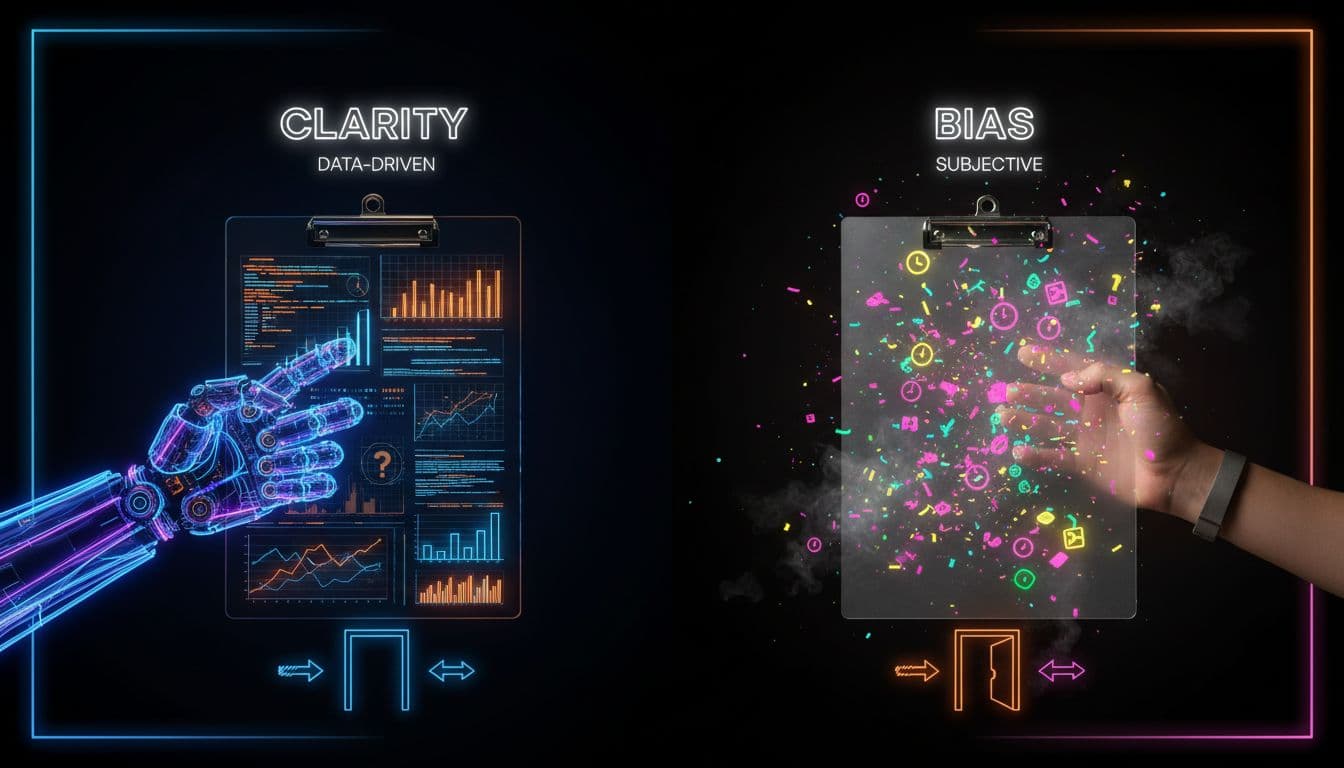
Human recruiters bring irreplaceable assets to the table: emotional intelligence, deep intuition, and a nuanced sense for cultural fit that no algorithm can fully mimic. In sensitive search mandates—such as building a founding team or evaluating interpersonal dynamics—these strengths are powerful levers. However, even the most seasoned professionals are not immune to the biases embedded in human cognition. Unconscious preferences, cultural shorthand, and subjective assessment standards often creep in, influencing outcomes in ways even experts cannot always detect.
This subjectivity becomes a real bottleneck when scaling is the priority. Decision timelines stretch, feedback loops turn unpredictable, and every candidate interaction subtly shifts with the recruiter’s mood or background. Worse still, the very skills that make human recruiters effective in complex cases—like reading between the lines—can introduce variability at the worst possible moment: during high-speed scaling, where consistency is critical and every delay counts. Diversity efforts often stumble here, as unconscious bias subtly guides shortlisting and interviews, making true inclusivity more elusive than founders imagine.
AI Recruiting Agents — The Data-Driven Revolution
AI recruiting agents, purpose-built for the realities of 2026, draw their strength from data, not hunches. These systems analyze behavioral signals, parse digital achievements, and synthesize skill assessments with a level of objectivity that human intuition simply can’t replicate. Algorithms systematically score candidates against predefined benchmarks, track relevant experience in real time, and continuously improve their decision-making through machine learning on millions of hiring outcomes.
The result is a recruiting process with unprecedented speed, transparency, and scale. AI agents don’t get fatigued or distracted, and they never let yesterday’s interview cloud today’s choice. Every applicant is assessed on a level playing field—skills first, background second—which directly accelerates hiring cycles and optimizes ROI. In the age of cloud-native startups and distributed teams, this radical efficiency isn’t just convenient; it’s a competitive necessity. For founders eager to close senior hires in days, not months, AI opens a door that manual, human-centered processes struggle to keep ajar. (For a deeper dive into how AI accelerates senior dev hires, see our article Close Senior Dev Hires in 5 Days with Remote AI.)
Bias-Free Hiring as the New Baseline
"Bias-free" isn’t a buzzword—it’s a strategic baseline for startups determined to win market trust, outpace regulatory risk, and build diverse teams. In 2026, regulatory environments are increasingly stringent, and both customers and talent scrutinize hiring processes for fairness and inclusivity. AI recruiting agents offer auditable, data-driven selection, automatically flagging patterns that humans might overlook.
For founders, bias-free hiring means more than just compliance. It builds robust, genuinely diverse teams that reflect, rather than replicate, the founder’s worldview. Market reputation soars as objective metrics replace personal notes and partiality. Here’s how the two approaches stack up:
| Criteria | Human Recruiter | AI Agent |
|---|
| Bias-free Hiring | Variable | High |
| Data-driven Decisions | Low-Medium | Very High |
| Speed of Process | Moderate | Very Fast |
| Scalability | Limited | Unlimited |
| Transparency | Personal Notes | Full Audit |
When the stakes are high and the world is watching, founders cannot afford anything less than maximum transparency and efficiency. Discover more about how automation transforms recruitment economics in AI Recruitment Automation Cuts Agency Costs Fast.
Antithesis and Hybrid Scenarios — Who Wins Where?
While AI agents excel in speed and fairness, there remain scenarios where human insight is irreplaceable—particularly when cultural fit, team chemistry, or ambiguous context is at play. In early startup stages, a founder’s gut sense of mission alignment may uncover gems that an algorithm would rank “Tier B.” Conversely, many organizations have experienced AI agents outperforming human recruiters by surfacing under-the-radar tech talent based solely on skills and outcomes. The delta in candidate quality and team performance in these cases can be measured in business results, not just anecdotes.
What’s emerging in 2026 is not a contest, but a fusion—hybrid systems where founders leverage AI’s scale and auditability alongside prompt human feedback in mission-critical moments. Pioneering HR leaders cite the synergy of data-led shortlisting with empathetic final interviews as the “engine” for bias-free yet still human hiring. The result? Teams assembled in record time, on objective merit, yet with the nuance only experience can provide. For insight into avoiding hidden obstacles in your talent pipeline, read 5 Signs Your Talent Pipeline Blocks Top Hires Now.
Ready to see this in action? Learn more at WorkorAI.
FAQ
How does AI ensure a bias-free hiring process in 2026?
AI agents apply consistent, transparent criteria to all candidates, removing subjective interpretations from the assessment process. Auditable algorithms and real-time analytics flag potential biases, ensuring fairer outcomes and regulatory compliance.
What limitations do human recruiters still overcome better than AI?
Human recruiters excel in deciphering subtle culture fit signals, managing sensitive negotiations, and adapting to unique, high-stakes situations where empathy and intuition matter.
Does data-driven hiring mean sacrificing cultural fit?
No—best-in-class AI compliments data with behavioral assessments and, when paired with expert human reviewers, helps surface candidates who combine both technical competency and cultural alignment.
How fast can an AI agent make a hiring recommendation?
AI agents can screen, assess, and recommend candidates in hours, dramatically shortening traditional hiring cycles that can extend for weeks.
What are the long-term benefits of bias-free hiring for founders?
Bias-free hiring diversifies talent, reduces legal risks, speeds up team formation, and builds a brand known for meritocracy and trust—fueling growth on multiple fronts.
Conclusion
Bias-free, data-driven hiring in 2026 isn’t just the theme of the month—it’s the rock-solid foundation upon which future unicorns are built. Founders who embrace objective, AI-powered recruiting not only hire better and faster, but also build teams that reflect true ambition and integrity. The way forward: integrate AI tools into your workflow, preserve space for human judgment when it truly counts, and never settle for processes you can’t reliably defend or scale. Respect for both human expertise and AI strength is not a contradiction; it’s the emerging gold standard for world-class startups.
CTA Block
Ready to build your bias-free talent engine? Explore how WorkorAI can accelerate and future-proof your hiring in 2026. Try our platform or schedule a strategic session—lead the evolution, don’t just watch it.