How ai trust layer transforms labor markets now
The pace of change in the labor market has never been more electrifying—or more precarious. Companies navigating remote, cross-border hiring face a stark contradiction: legacy paper credentials versus the urgent need for verifiable, dynamic skills. As talent networks stretch across continents and digital teams spin up overnight, two questions dominate boardroom and code review alike: Who do we really trust? And how fast can we trust them?
Today, AI and blockchain are reshaping this trust calculus, not by tearing down old institutions, but by leveling up the very infrastructure of talent verification. With decentralization and a robust trust layer at the core, the industry is moving past static resumes and into an era where skills are lived, proven, and digitally embedded. What follows is an inside look at how WorkorAI—and trailblazers in tech—are building the new market for proven, truly mobile skills.
The Cracks in the Old Foundation
For years, teams have relied on static resumes and unverified claims, hoping that intuition (and perhaps a little luck) could outpace the risks of a mis-hire. It worked in an era of local networks and stable roles; it falters in today’s high-velocity, distributed world. Both startups and enterprise giants now wrestle with a profound trust deficit, as credentials blur and the risks—failed projects, lost time, eroded morale—become too visible to ignore.
The problem isn’t a lack of talent, but a lack of clarity and verification. Businesses face inefficiencies and hidden costs, while skilled professionals risk being overlooked or misjudged—all thanks to an opaque and outmoded system that simply can’t scale to the global, dynamic future of work.
Decentralization: A New Blueprint for Opportunity
Decentralization, once the domain of crypto-enthusiasts, is now redefining talent validation for everyone. Centralized gatekeepers—institutions and intermediaries guarding credentials—are gradually giving way to open, permissionless networks where anyone with real skills can be seen, trusted, and matched quickly. It’s not anarchy; it’s a new level playing field.
Why decentralization matters:
- Agility: Instantly verify abilities across borders.
- Reduced bias: Data-driven insights minimize gut-feel errors.
- Global access: Talent is unchained from location, and businesses tap into vast new pools.
Think of it as replacing guarded gates with open bridges. The result is a market where verified skills travel—and teams can source excellence, not just proximity.
See more on how next-gen automation is changing the game in AI recruitment automation.
The AI-Powered Trust Layer: From Promises to Practice
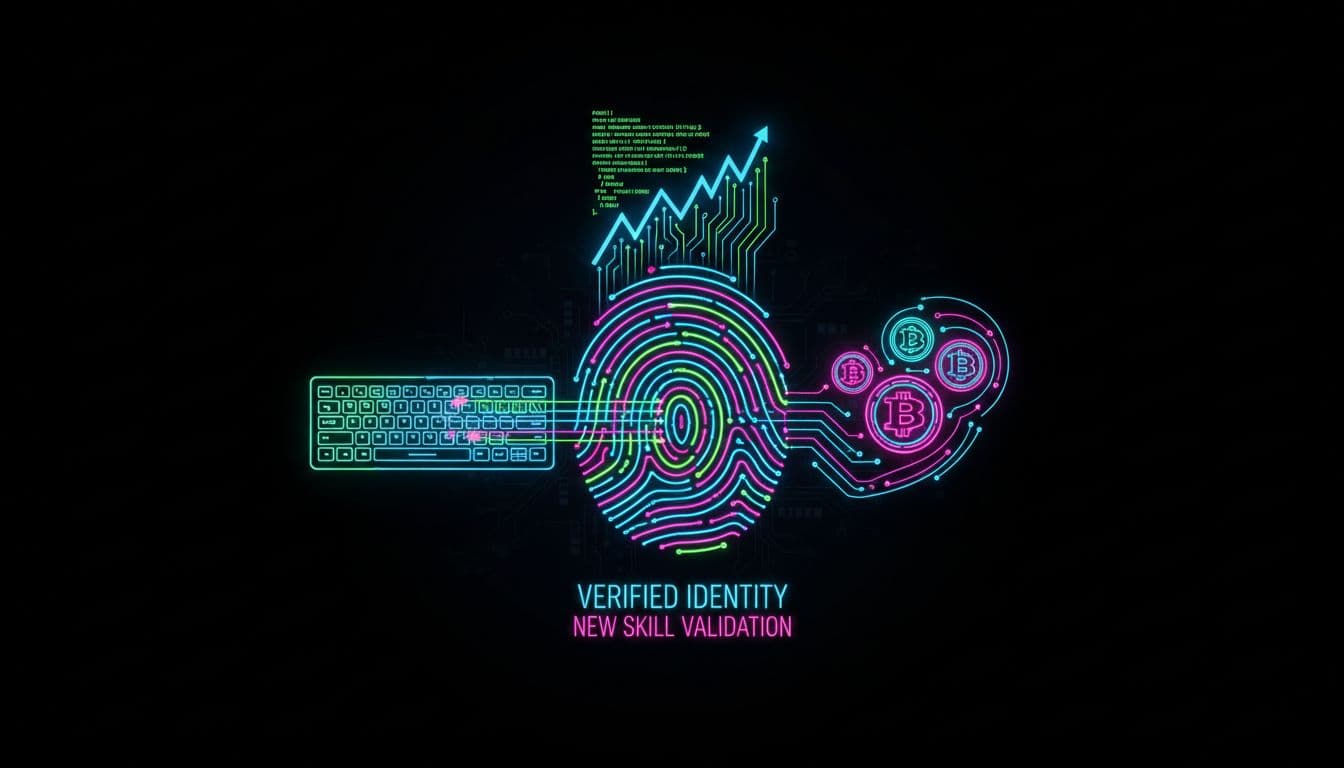
Enter the Trust Layer, WorkorAI’s technical breakthrough. Instead of more paperwork, candidates and companies interact with an AI-driven fabric that automates skill verification, creates immutable blockchain records, and builds reputation free from conflict of interest.
How it works:
- AI skills assessment: Deep, real-world testing—not just quiz scores or keywords.
- Blockchain validation: Every proof is logged, tamper-proof, and portable.
- Trustless reputation: No more signaling or “brand halo”—real work speaks, updates, and travels with the candidate.
Before/after snapshot:
| Stage | Centralized System | Trust Layer |
|---|
| Screening | Manual resume review | Instant AI assessment |
| Validation | References, interviews | Blockchain-verified skills |
| Onboarding | Weeks of paperwork | Immediate trust transfer |
| Performance | Annual reviews | Ongoing, real-time signals |
This shift turns hiring from cautious guesswork into decisive, data-rich action. Teams are built on evidence, not just trust-by-proxy.
Verified Skills as the New Gold Standard
Data from leading WorkorAI integrators is telling: hiring cycles drop by up to 40%, with manager satisfaction and talent retention markedly higher when skill-verification is embedded into the process. Forward-thinking tech companies are already treating verified abilities not as “nice to have,” but as the non-negotiable backbone of recruitment.
Why? Because in competitive markets, the most valuable currency isn’t a degree—it’s a blockchain-backed portfolio of evolving, validated skills. Unlike the static CV, this dynamic record adapts and persists across projects and borders, becoming a lifelong passport for truly mobile professionals.
Curious how smart resumes and verified portfolios outperform traditional job search? Read on in Avoid job search burnout with a smart resume.
Intersectional Impact: Beyond Hiring
The Trust Layer’s ripple effects extend well beyond recruitment. Freelancing, upskilling, and workforce mobility become seamless as decentralized reputation and verified skills unlock new models—platforms where merit, not backchannel endorsements, determines opportunity.
- Freelancers leap into roles with instant, verifiable proof.
- Learners move from certifications to demonstrable abilities, with upskilling recorded as it happens.
- Teams fluidly assemble, confident in the trust infrastructure beneath every collaboration.
This isn’t just a better resume; it’s a shared scaffolding for the open labor market, enabling fairer, faster, and more resilient work ecosystems.
For a deep dive into high-speed hiring across borders, explore Closing senior dev hires in 5 days.
Expert Voices
Leading developers applaud the move:
“In my teams, skill signals carry more weight than a diploma ever could—blockchain-backed proof removes doubt on both sides,” shares one engineering leader.
HR tech innovators highlight, “Decentralization lets us tap talent we’d never find through conventional channels. The trust layer builds bridges we actually need.”
The consensus among experts? Markets built on verified meritocracy—not inherited reputation—will outpace those stuck in credentialism.
FAQ
What is a “trust layer” in the context of AI and blockchain recruiting?
It’s a digital infrastructure combining AI-powered skill verification with blockchain-logged records, enabling true confidence in every hiring decision—no matter where talent comes from.
How does decentralization practically improve hiring outcomes?
It removes bottlenecks and bias by letting verifiable skills speak directly to employers, accelerating hiring and giving equal opportunity to all qualified talent, regardless of network or location.
Are verified skills reliable enough for high-stakes hiring?
Yes. With advanced assessment and tamper-proof blockchain validation, companies can rely on verified skills for critical roles, dramatically reducing risk and onboarding time.
Can legacy organizations integrate these new approaches?
Absolutely—with pilot integrations, traditional firms can overlay trust infrastructure on top of existing processes and immediately benefit from improved speed and transparency.
What are the main challenges in mass adoption?
Mainly cultural inertia and the need for education. But as proven use cases multiply and trust infrastructure matures, scaling becomes a practical inevitability.
WorkorAI’s trust layer and decentralized infrastructure aren’t just incremental tweaks—they represent a leap toward a smarter, more equitable labor market. Leaders who embrace this shift stand to unlock new efficiencies, access richer talent pools, and build organizations defined by verified merit and speed.
Start piloting the WorkorAI trust layer today—subscribe for insights, explore how verified skills power world-class teams, or connect for implementation strategies. The future of work is open, trusted, and ready for your boldest ambitions.
Learn more about building trusted, decentralized teams at WorkorAI.