Ai career agent for smarter developer job search
Manual job search for developers is a study in unnecessary repetition. Endless feeds, bland filters, and the infamous ritual of uploading (and re-uploading) a resume that feels more like a bureaucratic checkpoint than a true reflection of skills—these are frustrations almost every developer knows. Even the most advanced coding talent is forced to play the same manual game, with tools that never remember their preferences or career goals.
At the heart of this inefficiency is a missing ingredient: persistent memory. Each job cycle begins in a vacuum, requiring developers to re-educate platforms and wade through irrelevant listings, even if their stack, salary wishes, and timezone haven’t budged in years. The result? Time lost, opportunities missed, and talent diluted by “job board fatigue.”
But what if the job search itself kept pace with the developer, evolving as fast as the codebase? Enter the AI Career Agent: an always-on, context-powered assistant (WorkorAI) committed to smarter, more agentic job search. The promise? Save hours, make sharper career moves, and let your personal context—not job board chaos—drive the journey.
The Modern Developer’s Job Search: Why Legacy Approaches Fall Short
Examine most developers’ workflow and a curious paradox appears. To build something unique in code, devs embrace the DRY (Don’t Repeat Yourself) mantra—yet when seeking new roles, the process is painfully repetitive. Sifting disjointed boards, copy-pasting skills, and revisiting the same “preferred stacks” dialog boxes renders strong technologists passive, not proactive.
The core issue is lack of persistent context. Salary bands, specific technology niches, remote dreams, or timezone boundaries vanish from memory between LinkedIn, Stack Overflow Jobs, or job aggregation apps. Inconsistent formats garble the signal: one board’s “remote” may mean “within five time zones,” another, “anywhere but here.” Unsurprisingly, the cognitive cost of manual sorting grows intolerable—so talented engineers often disengage, letting generic offers languish in unread folders.
Legacy tools leave another gap: no career agent stands guard to filter or explain. Why did this role land in your inbox? Why is a fintech backend posting halfway around the globe even visible? Traditional sites don’t know, can’t explain, and won’t evolve—leaving developers to navigate a world optimized for recruiters’ convenience, not their own advancement. For a deeper dive into these limitations, see Agentic Job Search: Why Static Job Boards Can’t Compete.
Enter WorkorAI: The Persistent AI Career Agent Built for Developers
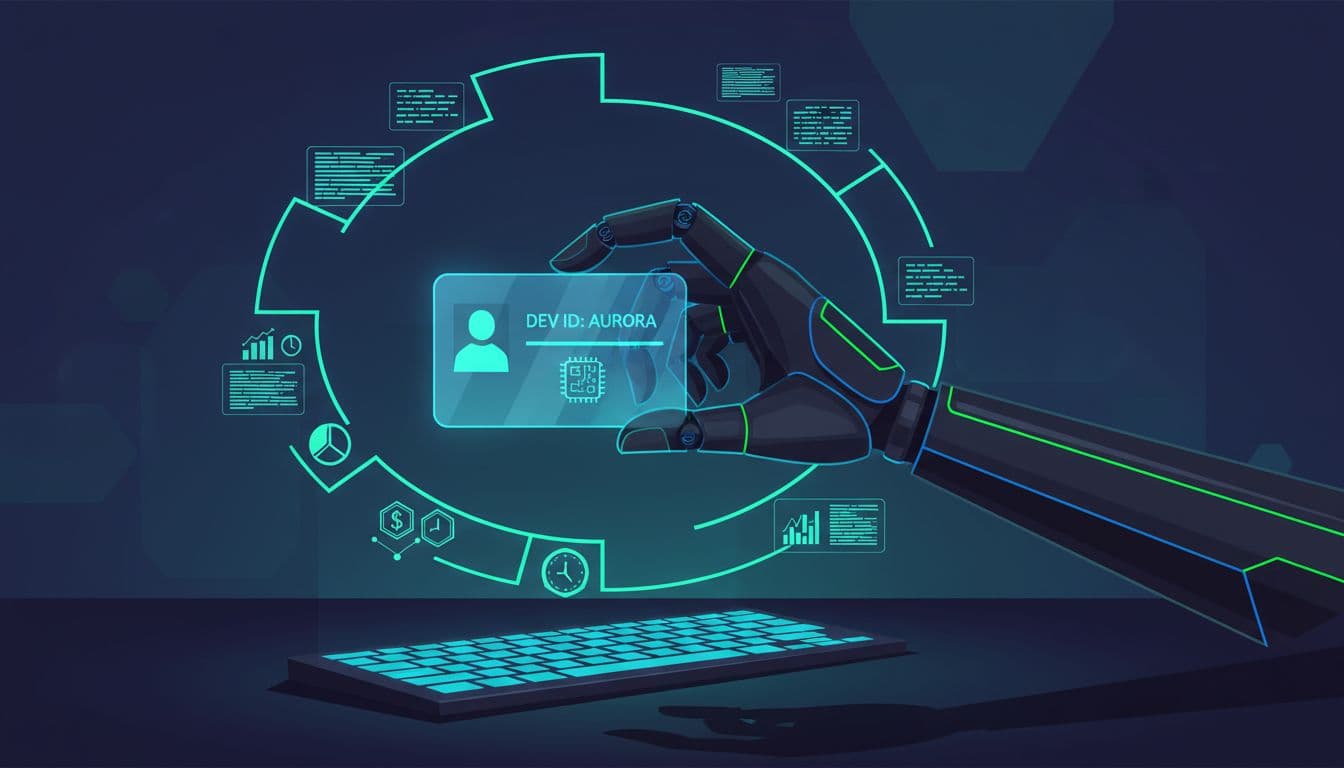
WorkorAI isn’t another board or “apply now” widget: it’s a persistent, always-evolving AI career agent designed expressly for developer workflows. Imagine a digital twin who learns, remembers, and adapts to the nuances of your stack, salary rites, career aspirations, GitHub highlights, and even timezone quirks—then advocates for you within the job market, wherever you code.
At the core is the WorkorAI Talent Profile: a structured, living snapshot of who you are as an engineer (skills, seniority, roles wanted, workflows, compensation range, remote/flexible preferences, and project links). This context becomes reusable currency; your goals and history aren’t a set of static keywords, but dynamic signals, instantly available for smarter matchmaking.
Contrast this with prior cycles of updating bios and chasing inbox offers. With a persistent agent, matching is context-aware and multi-dimensional—filtering out distractions, ranking fit based on goals, and even flagging risks or mismatches before you invest precious time. No “resume upload” reruns required. Profile-centric intelligence brings less redundancy, richer matching, and intelligent explanations for every opportunity surfaced. For practical examples of how this flips the table on classic hiring friction, see 5 Signs Your Talent Pipeline Blocks Top Hires.
Agentic Job Search in Action: How WorkorAI Connects to Personal AI Agents
What does agentic job search look like in real life? Imagine an AI assistant woven into your coding editor, chat window, or cloud coding environment. Because it’s powered by the persistent WorkorAI Talent Profile, your agent doesn’t just keyword match—it interprets, filters, and contextualizes roles for you, every time.
How does it work? Through secure, standards-based connectivity using the Model Context Protocol (MCP), the WorkorAI platform interfaces smoothly with most AI development assistants. Whether you prefer Claude, Codex, Cursor, Gemini, Copilot, Antigravity, or OpenClaw, your context is always available—no manual transfer required.
Two scenarios illustrate this transformation:
- Scenario 1: While coding in Cursor, a developer asks their AI agent for open roles. Instantly, only remote, senior Go back-end roles within the right timezone bubble up—explained, scored, with risks noted.
- Scenario 2: Using Codex or Claude in a chat, the AI career agent flags and deconstructs offers, matching against salary expectations, stack fit, and long-term growth vectors—allowing for truly informed decision-making.
And the payoff is real. Early adopters report up to a 60% reduction in spammy, irrelevant offers, and a measurable rise in conversion to meaningful conversations or interviews. For more on agentic matching in practice, read Active Search AI: Prompt for Smarter Job Matches.
Getting Started: How Developers Can Instantly Upgrade Job Search with WorkorAI
Ready to leave endless resume rehashes behind? WorkorAI makes next-level job search not only possible, but effortless:
- Set up your WorkorAI Talent Profile—a one-time process, all context structured and future-proof.
- Secure your MCP key—this cryptographic token is your passport for agent-to-platform connection.
- Run the install command in your preferred AI agent setup (e.g.,
workorai install inside Cursor, Codex, or Gemini).
- Enable persistent, agentic job search—from that moment, your search is context-powered, not ad-blind.
What’s best: it works with tools you already use. As your career goals shift—pick up a new language, want to raise salary bands, seek hybrid instead of remote—the agent requires zero retraining or profile resets. The profile persists, evolves, and powers smarter matching every job cycle.
FAQ
Q1: How does WorkorAI differ from traditional job boards for developers?
A1: Traditional job boards require repetitive, manual searching and overlook your unique profile. WorkorAI acts as a persistent AI career agent, filtering and explaining roles based on your evolving context, saving time and surfacing better opportunities.
Q2: What is the WorkorAI Talent Profile and why is it important?
A2: The WorkorAI Talent Profile is where your stack, preferences, goals, and experience are structured and stored, allowing AI agents to match and prioritize jobs uniquely suited to you.
Q3: Will WorkorAI work in my preferred coding environment?
A3: WorkorAI integrates with many AI agent platforms like Cursor, Claude, Codex, Gemini, Copilot, Antigravity, and OpenClaw, letting you tap into agentic job search wherever you code or chat.
Q4: What’s the role of the Model Context Protocol (MCP) in all this?
A4: MCP is the open protocol connecting your AI agents to WorkorAI’s structured career context—enabling secure, standards-based integration with your existing workflows.
Q5: How do I set up WorkorAI in my agentic workflow?
A5: Just create your Talent Profile, retrieve your MCP key, and use the install command within your AI agent’s environment—no need to wade through another resume upload.
The future clearly belongs to developers who delegate the mechanical side of job search to smart agents. WorkorAI’s AI career agent is not just an upgrade—it’s a transformation in how engineering careers are navigated and decisions are made. Persistent context, real-time matching, and agentic power restore ownership, cut wasted effort, and offer sharper opportunity insights with every search.
Step forward into developer career freedom—start today. Create your WorkorAI Talent Profile, claim your MCP key, and run the install command in your coding environment or AI agent. Subscribe now and let WorkorAI’s AI career agent bring opportunity directly to where you build your future.